What to Know About Lymphedema: A Comprehensive Guide to Diagnosis, Treatment, and Long-Term Care
Lymphedema is a chronic and progressive condition where the lymphatic system can’t properly move fluid, leading to ongoing swelling, typically in the arms or legs, but it can also be present in other areas of the body, like the head, neck, chest, abdomen, and groin. While there’s no cure, lymphedema can be managed effectively with early treatment, consistent care, and the right combination of therapies tailored to each person.
If you’re here, you may be dealing with symptoms, trying to make sense of a diagnosis, or wondering why it took so long to get answers. This guide walks through what lymphedema is, why it’s often missed or misdiagnosed, what treatment looks like day to day, and how patients successfully manage it over time. The goal is to give you clear, practical information so you can better understand what’s happening in your body and feel more confident in what comes next.
Key Takeaways
- Lymphedema is a chronic condition caused by impaired lymphatic drainage, leading to persistent swelling and other symptoms that can progress without early treatment.
- Early diagnosis and intervention are critical because early-stage lymphedema may be reversible, while later stages can lead to permanent tissue changes like fibrosis.
- The most effective treatment is complete decongestive therapy (CDT), which combines compression, manual lymphatic drainage, exercise, and skin care.
- Long-term lymphedema management depends on daily consistency, including home-based care such as compression use, self-MLD, movement, and the use of pneumatic compression devices.
- Many patients experience delayed diagnosis and access barriers, making self-advocacy, education, and specialist care essential for better outcomes.
What is Lymphedema?
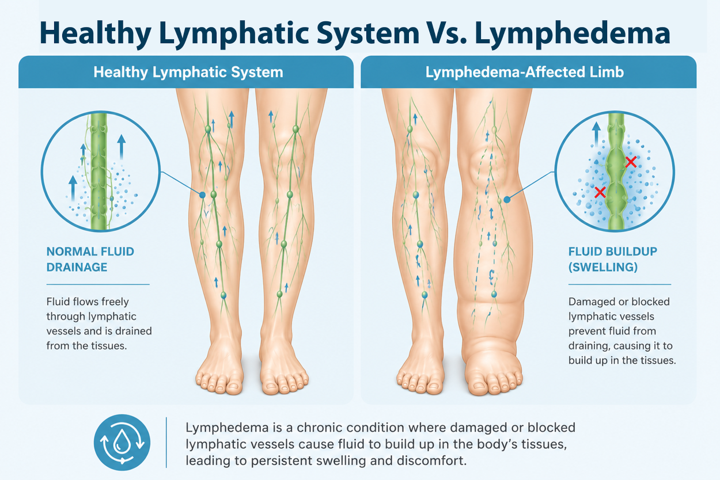
Lymphedema is a chronic condition that happens when the lymphatic system, which is your body’s network for moving fluid and supporting immune function, can’t properly drain lymph fluid. When that flow is disrupted, fluid builds up in the surrounding tissues, leading to swelling that most often affects the arms or legs, but can also affect the chest, head and neck, groin, or other areas. For patients diagnosed with lymphedema, education and ongoing management are key to understanding this lymphatic disorder and feeling more confident and in control over time.
Symptoms
Lymphedema can show up in subtle ways at first, but the symptoms tend to build over time as fluid continues to collect in the tissues.
- Persistent swelling: A feeling of fullness or visible swelling in a limb or area of the body that doesn’t fully go away, even after rest.
- Heaviness or tightness: The affected area may feel weighted, tight, or harder to move comfortably throughout the day.
- Reduced range of motion: Swelling and tissue changes can make it more difficult to bend joints or move normally.
- Skin changes (thickening or hardening): Over time, the skin may become firmer, less flexible, or develop a “woody” texture due to fibrosis.
- Aching or discomfort: Some people may experience dull pain, tenderness, or a general sense of discomfort in the affected area.
- Clothing or jewelry feeling tighter: Rings, sleeves, or shoes may feel snug before swelling is visibly obvious.
- Recurring infections: The affected area may be more prone to infections like cellulitis because of impaired lymphatic function.
- Pitting: In the early stages of lymphedema, pressing on the swollen area may leave a temporary indentation, known as pitting edema.
Causes
Lymphedema develops when the lymphatic system is damaged, blocked, or doesn’t form properly, making it difficult for fluid to drain the way it should. Causes of lymphedema include:
- Primary lymphedema: For some patients, lymphedema can be genetic or congenital and present at birth. With primary lymphedema, the vessels or nodes may be missing, underdeveloped, or not functioning properly from birth or early in life. Others may develop lymphedema tarda, which is a form of hereditary lymphedema that develops after the age of 35.
- Secondary lymphedema: This is the most common type of lymphedema and occurs when a previously healthy lymphatic system is disrupted by an external factor, such as:
- Cancer treatment: Removal or damage to lymph nodes or vessels can block healthy fluid flow.
- Cancer: While cancer treatment and radiation are more common causes, cancer itself can cause lymphedema if a tumor obstructs lymphatic vessels.
- Vascular disease: Vascular conditions, such as chronic venous insufficiency or blood clots, can impact the natural drainage of fluid.
- Infection: Certain infections can damage lymphatic vessels or nodes, impairing drainage.
- Injury or trauma: Physical damage to tissues or lymphatic structures, such as crushing incidents or burns, can interfere with fluid flow.
- Obesity: Lymphedema and obesity are connected, as excess adipose tissue can place pressure on lymphatic vessels and nodes, decreasing or preventing lymphatic drainage.
Stages
Lymphedema is a progressive condition, meaning it moves through stages:
- Stage 0 lymphedema: There are no visible signs of swelling yet, but the lymphatic system has already been compromised. You might notice subtle sensations like heaviness, tightness, or fatigue in the affected area.
- Stage 1 lymphedema: Swelling is present but often comes and goes, and it may improve with elevation or rest. The tissue is still soft, and pressing on the area may leave a temporary indentation known as pitting.
- Stage 2 lymphedema: Swelling becomes more persistent and no longer fully resolves with elevation. The tissue begins to harden due to fibrosis, and pitting may become less noticeable over time.
- Stage 3 lymphedema: Swelling is severe and accompanied by significant skin thickening, hardening, and changes in shape. Mobility and function can be impacted, and the risk of complications like infections increases.
Why Is Lymphedema Often Misdiagnosed?
Lymphedema is often misdiagnosed because its early symptoms can be subtle and easily mistaken for more common issues like weight changes, general swelling, or circulation problems. On top of that, many providers simply aren’t trained to recognize it. For patients experiencing symptoms, screening and follow-ups are often inconsistent, even for people prone to lymphedema risk factors, like those undergoing cancer treatment. As a result, patients are frequently told their symptoms are normal, dismissed, or sent from one provider to another without clear answers.
- Patients frequently experience long delays between symptom onset and diagnosis, often seeing multiple providers before lymphedema is identified.
- Many patients report being dismissed or misdiagnosed, leading to emotional distress and disease progression.
- Research shows the majority of patients wait over a year for diagnosis and treatment, with non-cancer patients especially underserved.1
Lack of Awareness and Education
A major reason lymphedema is missed early comes down to gaps in awareness on both sides of the exam room. This lack of education contributes to delayed care and worse outcomes.
- Patients commonly report never being informed that lymphedema was a risk, especially after cancer treatment.
- Provider education gaps are common, including:
- Limited screening during and after cancer care
- Low referral rates to certified lymphedema therapists (CLTs)
- The lymphatic system is described as under-taught and misunderstood in medical training
Why Does Early Intervention Matter for Lymphedema?
Catching lymphedema early can change the course of the condition. In its earliest stage, swelling may be mild, temporary, and sometimes reversible through prompt treatment. But when diagnosis is delayed, fluid buildup can lead to lasting tissue changes like fibrosis, making symptoms harder to manage and increasing the risk of complications. That’s why early detection is critical for protecting long-term function and quality of life.
Proactive care starts with:
- Early screening
- Symptom awareness
- Timely referral to a certified lymphedema therapist (CLT)
This approach is important across all at-risk groups, including those with lower extremity lymphedema, breast cancer-related lymphedema, and head and neck lymphedema, where symptoms may impact mobility, swallowing, or breathing.
Clinical frameworks, such as those provided by the National Comprehensive Cancer Network (NCCN), emphasize routine monitoring and early intervention, especially after cancer treatment, because early action can prevent progression, reduce treatment burden, and improve overall outcomes.
What Are Common Barriers to Lymphedema Care?
Getting a diagnosis is only part of the challenge. Many patients living with lymphedema struggle to access consistent, specialized treatment. In the U.S., there’s a significant shortage of certified lymphedema therapists (CLTs), who treat lymphedema, often cited as roughly one provider for every 1,000 patients.2 The gap, combined with system-level hurdles, means people can wait weeks or months to begin care, or never get referred at all. Non-cancer patients are especially at risk of falling through the cracks, as referral pathways tend to be more established in oncology than in primary or general care.
Common barriers to lymphedema care include:
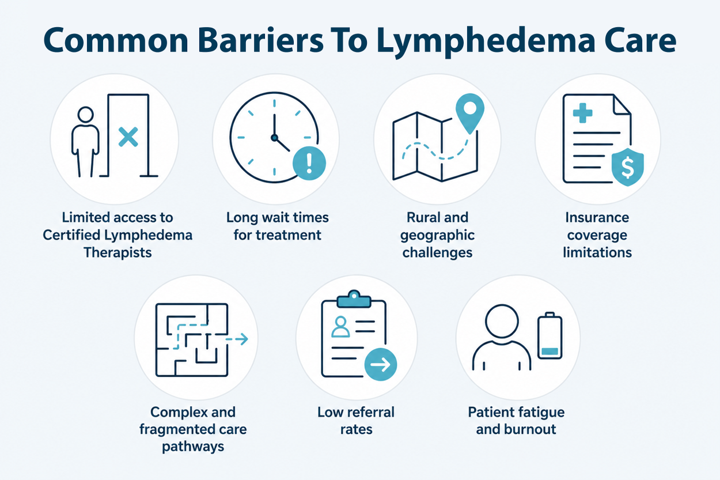
- Limited access to CLTs: A national shortage makes it difficult to find specialized care, particularly in less populated areas.
- Long wait times for treatment: Even when providers are available, demand often leads to delayed appointments and slow care initiation.
- Rural and geographic challenges: Patients outside major metro areas may need to travel long distances for therapy, making ongoing care harder to maintain.
- Insurance coverage limitations: Coverage for therapy, compression garments, and devices can vary widely, creating financial barriers to consistent treatment.
- Complex and fragmented care pathways: Patients are often left to coordinate between multiple providers, referrals, and services on their own.
- Low referral rates, especially for non-cancer cases: Without clear screening protocols, many patients are never directed to appropriate therapy.
- Patient fatigue and burnout: Navigating appointments, insurance, and daily management can feel overwhelming, leading some to delay or discontinue care.
Why Is Complete Decongestive Therapy the Gold Standard for Lymphedema Treatment?
No matter where it’s located in the body, complete decongestive therapy (CDT) is the gold standard for treating lymphedema. CDT is a multimodal treatment approach that consists of an intensive in-clinic phase, in which patients will work with a CLT several days per week for several weeks, depending on the severity of their condition. Phase I is followed by Phase II, which is the maintenance phase. Once in-clinic treatment is complete, patients will maintain the results achieved in Phase I at home to prevent the progression of symptoms.
Complete decongestive therapy consists of several key components, including:
- Manual lymphatic drainage (MLD): This specialized hands-on technique promotes lymphatic drainage by gently massaging the tissues to stimulate the lymphatic system and improve fluid movement. A CLT will provide manual lymphatic drainage during Phase I of CDT and teach you at home. You can watch our self-manual lymphatic drainage guides for an easy visual demonstration to ease swelling.
- Compression: In Phase I of CDT, your CLT may apply compression bandages to the affected area, which may be worn for several weeks and reapplied as needed. Along with compression bandaging, your CLT may recommend compression garments for lymphedema for daily wear to ease swelling and discomfort.
- Lymphedema exercises: Targeted, low-impact exercises like walking, swimming, biking, or certain yoga poses for lymphatic drainage help stimulate lymph flow and support circulation.
- Skin care for lymphedema: Proper skin care reduces the risk of infection, which lymphedema patients are more vulnerable to. This includes keeping the skin clean and moisturized, monitoring for cuts or irritation, and protecting the skin from the sun.
- Patient education: A core part of CDT is learning how to manage lymphedema day to day. This includes self-MLD techniques, recognizing early warning signs, maintaining routines, and understanding how lifestyle factors impact symptoms. The goal is to give patients the tools to stay consistent outside the clinic.
Why Does Clinic Care and Home Care Deliver the Best Outcomes?
Long-term success in managing lymphedema depends less on occasional treatment and more on what happens day to day. Clinic-based care provides essential guidance, assessment, and hands-on therapy, but it’s the consistency of home management that helps maintain progress and prevent symptoms from progressing.
A hybrid approach that combines professional treatment with daily self-care tends to deliver the best results because it reinforces the work done in clinic and keeps fluid movement supported over time. This includes self-manual lymphatic drainage, compression use to maintain pressure, regular exercise and movement to support circulation, and pneumatic compression devices for additional at-home support for consistent lymphatic drainage.
What Is the Role of Pneumatic Compression Devices in Lymphedema Care?
Pneumatic compression devices (PCDs) are at-home tools that use controlled, sequential air pressure to guide lymphatic fluid through the body. For many people, the biggest challenge with lymphedema care is maintaining daily routines. PCDs help bridge that gap by making treatment more accessible and easier to sustain over time.
Key benefits of PCDs include:
- Full-body or hard-to-reach drainage: Helps support fluid flow in areas that may be difficult to reach with self-MLD alone.
- Easier routine-building: Offers a simple, repeatable process that can improve consistency with daily or frequent care.
- Physical and emotional recovery support: Many patients report reduced heaviness, improved comfort, and a greater sense of control over their symptoms when used as part of a broader care plan.3
At Tactile Medical, we offer two pneumatic compression devices to gain effective and consistent at-home lymphedema support: the Flexitouch Plus System and Nimbl System. The Flexitouch Plus is clinically proven to stimulate the lymphatic system, with garments for the upper body, lower body, and head and neck. The Flexitouch Plus System is a 60-minute daily treatment that delivers mild, dynamic pressure in 1-3 second intervals and creates a gentle “work and release” motion to promote The Nimbl is a small and compact PCD that applies a gentle squeezing action to direct lymphatic fluid away from the affected area toward healthy, functioning regions of the body. From there, the fluid can be naturally absorbed and eliminated to reduce symptoms like swelling.
How Does Education and Self-Monitoring Empower Patients?
With a condition like lymphedema, which is often under-recognized and not consistently taught in routine medical care, education becomes one of the most powerful tools a patient can have. Many people find they need to actively advocate for themselves, ask the right questions, and stay engaged in their care in order to get timely support and appropriate treatment. Self-monitoring and education can help patients recognize early changes, understand what is normal for their body, and respond quickly when symptoms begin to shift.
At Tactile Medical, we have an expansive library of educational videos and guides to make day-to-day management feel more manageable and less overwhelming.
What Is It Like to Live With Lymphedema?
Living with lymphedema can affect how the body moves, how everyday tasks feel, and even how someone experiences their own confidence and energy. Some of the most common day-to-day challenges include:
- Swelling and physical discomfort: Persistent fluid buildup can create heaviness, tightness, or aching that makes daily movement more difficult.
- Swallowing, breathing, or speech changes: For patients with head and neck lymphedema, swelling can affect the face or throat, interfering with essential functions like speaking clearly, swallowing comfortably, or breathing easily.
- Mobility and range of motion limitations: In the arms or legs, swelling and tissue changes can reduce flexibility, making it harder to lift, walk, or complete daily activities.
- Posture and structural changes: Ongoing swelling can shift how the body carries weight, leading to discomfort or imbalance over time.
- Difficulty with daily tasks: Simple activities like dressing, exercising, or household tasks may take more effort or require adaptation.
- Emotional and psychological impact: Because lymphedema is chronic and often visible, it can affect body image, confidence, and social comfort, especially when symptoms fluctuate or are misunderstood.
Lymphedema FAQs
How long does it take to get a lymphedema diagnosis?
To get a diagnosis, a doctor will often start with a medical history and family overview, which may take several minutes, followed by a physical examination to look for symptoms like swelling, pitting, or fibrosis. In some cases, doctors may administer specialized screening like a lymphoscintigraphy, CT scan, or ultrasound, which can take several minutes to an hour or longer.
However, finding a doctor who accurately diagnoses lymphedema can take weeks to years, depending on symptom recognition and provider awareness. Many patients see multiple clinicians before receiving answers, and delays are common because early signs are often mistaken for other conditions, especially when there is no known cancer history.
How do I find a certified lymphedema therapist near me?
There are several places to find a certified lymphedema therapist near you, including directories from:
Can lymphedema be reversed?
Early-stage lymphedema can sometimes be reversed with prompt treatment, but it is generally considered a chronic condition. In earlier stages, symptoms may improve with prompt treatment and consistent care, sometimes reducing swelling to a minimal or subclinical level. However, improvement does not mean the condition is cured, and ongoing management is still important to help prevent progression and maintain long-term control.
What are the early signs of lymphedema?
Early signs of lymphedema include mild swelling, heaviness, tightness, and reduced flexibility in the affected area, such as an arm or leg. Some people also notice clothing or jewelry feeling tighter. Symptoms may come and go at first before becoming more persistent over time.
What happens if lymphedema is left untreated?
Without treatment, swelling can worsen and become permanent. Over time, fluid buildup may lead to skin thickening, fibrosis, reduced mobility, and increased risk of infections like cellulitis. Early intervention helps prevent progression and long-term complications.
What are exercises to improve lymphatic drainage?
All exercise improves lymphatic drainage because muscle movement and deep breathing naturally stimulate the flow of fluid throughout the body, helping prevent the buildup of fluid in the tissues. Common exercises include walking, resistance training, light stretching, biking, swimming, range of motion movements, and deep breathing exercises. When combined with compression, these activities can help support fluid movement and reduce swelling over time.
What is a good skin care routine for preventing lymphedema infections?
Good skin care includes daily cleansing, moisturizing to prevent cracks, and protecting against cuts or injuries. Promptly treat even minor wounds, and monitor for redness or warmth. Healthy skin is essential because infections can worsen swelling and complicate lymphedema management.
How do you cope with the emotional impact of chronic swelling?
Coping with lymphedema often involves education, support, and consistent self-care routines. Understanding the condition helps reduce fear, while support groups or counseling can help process frustration or body image changes. Many patients also find confidence through stable symptom management and predictable routines.
Lymphedema Management: Take Control of Your Swelling
Lymphedema is a lifelong condition, but it doesn’t have to define daily life. When recognized early and managed consistently, symptoms can be controlled, and progression can often be slowed or prevented. While the journey can feel complex, especially given gaps in diagnosis and access, patients are not without options. Explore our lymphedema solutions, including the Flexitouch Plus and Nimbl systems, to effectively treat lymphedema by reducing swelling, encouraging the flow of lymph fluid, and relieving discomfort.